
Connecticut Solar Panel Buyer’s Guide

- Is Solar Right for You in Connecticut?
- Solar Incentives and Tax Breaks in Connecticut
- Finding the Best Solar Installer
- Other Things to Think About
- Solar Panel Costs in Connecticut vs Other States
- Solar Panel Efficiency in Connecticut’s Climate
- Common Solar Scams to Avoid
- Average Savings on Utility Bills in Connecticut
- The Long-Term Money Benefits of Solar in Connecticut
- Best Solar Panel Brands for Connecticut Homes
- Getting the Most Solar Savings in Connecticut
- Common Questions About Solar Panels
- The Bottom Line
Going solar in Connecticut offers significant benefits in 2024, with potential savings on utility bills, stabilized electricity prices, and low maintenance costs. Here’s what you need to know before making the switch:
Is Solar Right for You in Connecticut?
Connecticut is a great place to go solar because it has some of the highest electricity costs in the country. That means you can save a lot of money by making your own power from the sun instead of buying it from the utility company. It definitely makes it worth going solar in CT.
A typical home solar system in Connecticut is about 10.67 kilowatts (kW) in size. After taking advantage of the 30% federal tax credit, it costs around $22,583 on average. That might seem like a lot, but it can completely wipe out your electric bills, which saves the average Connecticut family nearly $2,300 every year.
Another great thing about solar is that it increases your home’s value. In Connecticut, solar panels are estimated to add about $15,646 to the price of a typical house. So not only do you save money on electricity, but your home is worth more too!
Solar Incentives and Tax Breaks in Connecticut
To make solar even more affordable, Connecticut offers some really helpful incentives. The CT Green Bank has low-interest financing available, with rates as low as 4.49%. That means you can spread out the cost of your solar panels over many years, making the monthly payments very manageable.
When you buy solar panels in Connecticut, you also don’t have to pay any sales tax on them. The state sales tax rate is 6.35%, so that’s a nice chunk of savings right there.

Plus, your solar system is exempt from property taxes too. So even though solar adds a lot of value to your home, your property tax bill won’t go up.
On top of the state incentives, there’s also a big federal tax credit available for solar. It’s worth 30% of the total cost of your system, and it’s available through the end of 2024. So between the state and federal incentives, the upfront cost of solar gets much more affordable.
In 2022, Connecticut introduced the Residential Renewable Energy Solutions Program as a replacement for net metering.
Finding the Best Solar Installer
There are a lot of solar companies out there, so it’s important to do your research and get multiple quotes to compare. Some of the top installers in Connecticut include SunPower, Posigen, and Trinity Solar.
When you’re comparing options, don’t just look at the price. Also consider the quality of the equipment they use, the warranties they offer, and their overall reputation. Read customer reviews and ask for references to make sure you’re working with a company you can trust.
Can you get free solar panels in Connecticut? Find out now!
Other Things to Think About
Before you make a final decision about solar, there are a few other things to consider too. First, think about your home’s suitability for solar. Is your roof in good shape? Does it get a lot of direct sunlight, or is it shaded by trees? Your installer can help assess this.
Also, consider how you want to pay for your system. You can buy it outright, finance it with a loan, lease the system, or sign a power purchase agreement (PPA). There are pros and cons to each option, so think about what makes the most sense for your budget and long-term goals.
Here’s a detailed guide on all solar financing options available in Connecticut.
Finally, make sure you understand how net metering works with your utility. Net metering is what allows you to send extra solar power back to the grid and get credit on your electric bill. The policies vary by utility, so ask your installer to explain the details.
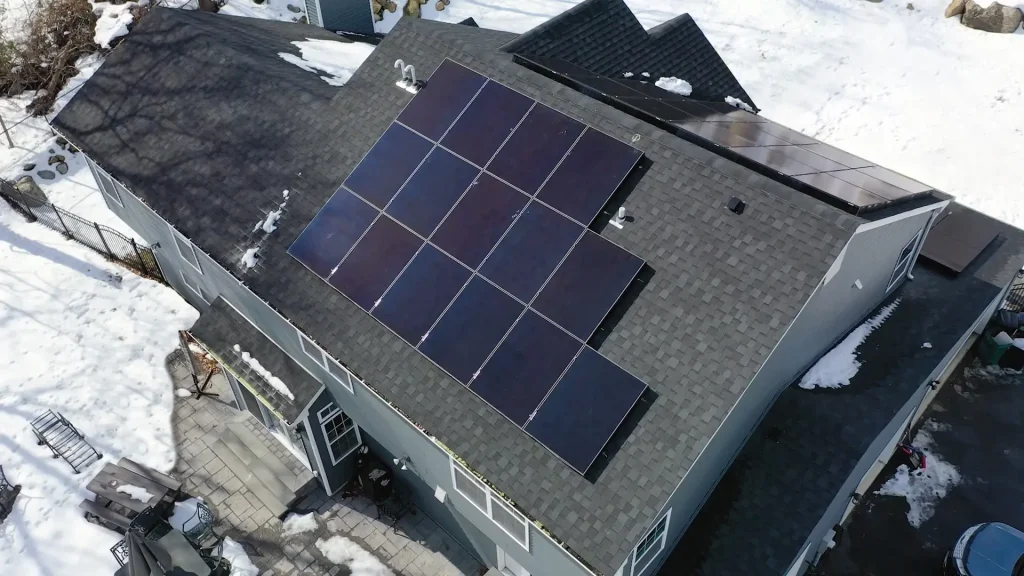
Solar Panel Costs in Connecticut vs Other States
- The average cost of solar panels in Connecticut is $2.86 per watt as of July 2024, lower than the U.S. average of $3.00 per watt.
- For a typical 6 kW system, the average cost in CT is $11,991 after the 30% federal tax credit.
- Connecticut has some of the highest electricity rates in the U.S., making solar savings more significant compared to states with lower utility costs.
Solar Panel Efficiency in Connecticut’s Climate
Connecticut’s climate is suitable for solar, with adequate sunshine to make panels a viable option for most homeowners.
However, Connecticut’s weather can impact solar efficiency:
- Shorter winter days and snow cover can reduce solar production seasonally.
- Roof orientation and shading from trees are important considerations in Connecticut’s climate.
Common Solar Scams to Avoid
- Beware of solar companies that use high-pressure sales tactics or offer deals that seem too good to be true.
- Carefully review the terms of solar leases and power purchase agreements (PPAs), as they can have escalating costs and be difficult to get out of.
- Get multiple quotes from licensed installers and thoroughly research their reputations before signing a contract.
Read our full guide on how we choose reliable solar companies.
Average Savings on Utility Bills in Connecticut
The average 10.67 kW solar system in Connecticut eliminates electric bills, saving nearly $2,300 per year on average.
Over 25 years, solar is 5.6 cents/kWh compared to 34.6 cents/kWh for utility power, making solar a much cheaper long-term option.

Most solar owners in Connecticut save 40-60% on electric bills, with systems paying for themselves in under 10 years.
The Long-Term Money Benefits of Solar in Connecticut
Getting solar panels for your home in Connecticut can save you a lot of money over time. Here’s how:
- Connecticut has really high electric rates, so making your own solar power saves you more money than in most other states. The average home can save around $2,300 per year on electricity!
- Over 25 years (the typical lifespan of solar panels), those bill savings can add up to over $58,000 after the system pays for itself. That’s a lot of extra cash.
- Solar also makes your home worth more – about $15,600 more for the average Connecticut house. And thanks to a state law, you won’t pay higher property taxes because of it.
- With electricity prices going up over time, your savings should keep growing every year. Solar locks in low energy costs for decades.
Best Solar Panel Brands for Connecticut Homes
When you’re shopping for solar panels in Connecticut, it’s smart to stick with trusted national brands known for top-notch quality and reliability. A few of the best options are:
- SunPower: These guys are famous for their super high-efficiency panels that crank out more power in less roof space. If your roof is on the smaller side, SunPower is definitely worth a look.
- Panasonic: Another leading brand that makes top-tier panels. Tons of solar installers in Connecticut are certified to put in Panasonic systems.
- Q Cells: Looking for a good balance of quality and affordability? Q Cells is a popular pick for solar shoppers on a budget.
Your solar installer can help you weigh the pros and cons of different brands based on your specific home, energy needs, and budget. Just be sure to get quotes from a few different companies to find the best overall deal.
Getting the Most Solar Savings in Connecticut
Want to really max out your solar savings in Connecticut? Here are some pro tips:
- Take full advantage of Connecticut’s sweet solar incentives. The state offers special low-interest solar loans, sales and property tax exemptions, and programs that actually pay you for any extra solar power you send to the grid.
- Jump on the 30% federal solar tax credit before it starts dropping in 2033. This big tax break can knock nearly a third off your total system cost right off the bat.
- Size your solar array to cover 100% of your electricity usage. That way, you can completely wipe out your monthly electric bills and score the biggest possible savings.
- If you can swing it, buy your panels with cash or a loan instead of leasing or a PPA. Owning your system leads to way higher savings in the long run, and you’ll get that nice bump in home value too.
The bottom line? By going solar in Connecticut, you can seriously slash your energy costs, pocket extra cash from generous incentives, and enjoy a hefty return on your investment over time. It’s a bright idea for both your wallet and the planet!
Common Questions About Solar Panels
How do solar panels work with my power company in Connecticut?
A solar company you work with takes care of connecting your solar panels to the power grid. After your panels are set up, they send in the needed paperwork and payments. Your power company then gives the okay to turn on your system. They also set up credits on your bill for extra energy your panels make. The solar installer signs you up for programs that give you money back.
What is net metering?
Net metering lets you send extra solar power you make back to the power grid. You earn credits that lower your future power bills. How much you get back depends on what your power company charges and their rules for net metering.
What are time-of-use rates?
Time-of-use rates are a way to pay for power based on when you use it. Power costs more when lots of people are using it, like during the day. It costs less early in the morning or at night when not as many people need it.
How long will my solar panels last?
Solar panels from the 1950s are still working today. Most new panels come with a 25-year promise to keep making power. But they can often keep going much longer than that. If you take good care of your panels, they can give you clean energy for many years.
Where should I begin? It looks tricky.
Going solar can seem hard with so many things to think about. We make it easier by helping with everything. They take care of the money side, planning, permits, putting in the panels, and keeping them running. So you can start saving without the hassle.
Will solar panels work on my roof?
Solar panels can go on most kinds of roofs, like shingles, tiles, and metal. A solar expert will check your roof’s shape, direction, and any shading. They’ll figure out if solar will work well and where to put the panels to get the most energy.
How much of my house can run on solar power?
How much solar can power your home depends on the size of your system, how much energy you use, and how big your roof is. A well-planned solar setup can often make enough power to cover most or all of your electric bills.
What does a solar power system cost?
The price of a solar system depends on its size, the parts used, and any money-back programs in your area. There are upfront costs, but special loans and incentives can make going solar easier to afford. The money you save on bills over time is usually more than what you pay at the start.
Does my solar system have a warranty?
Most solar panels have a 25-year warranty that promises they’ll keep making power. Other parts like inverters may have their own warranties. Your solar installer can tell you exactly what’s covered for your whole system.
What if I make more solar energy than I can use?
If your panels make extra energy, it goes back to the power grid through net metering. Your power company gives you bill credits for this extra energy. You can use these credits to pay for power later on.
Will I still get an electric bill if I have solar panels?
You’ll still get a power bill, but it will be a lot lower or even zero depending on how much energy your solar panels make. You might have to pay a small fee each month to stay connected to the grid.
If the power goes out, will my solar panels stop working too?
If your panels are connected to the grid without a backup battery, they will shut off during an outage to keep people safe. Adding a battery lets you keep your power on even during blackouts.
The Bottom Line
Going solar is a big decision, but it’s often a very smart one in Connecticut. Between the high electricity rates, the generous state and federal incentives, and the boost in home value, solar can put a lot of money back in your pocket in the long run.
The key is to do your homework, get multiple quotes, and work with an installer you trust. With the 30% tax credit available through 2024, now is a great time to make the switch to clean, affordable solar power.

Ted Fawcett is the Founder and Senior Advisor at ORKA Finance, a company dedicated to making commercial solar financing more accessible to businesses of all sizes. With over a decade of experience in the solar energy finance industry, Ted is a recognized expert and thought leader in this field.
Subscribe to newsletter
Stay on top of the latest guides and tips on solar.
Related articles


Find Installers In Your City
Find the best solar installers in Connecticut in one click. Start your journey to savings today!